
If your property's brush clearance was completed this spring, you're off to a good start. But in Southern California, wildfire risk doesn't end when the calendar changes. Fires can ignite almost any time of year, making defensible space an ongoing responsibility—not a one-time project.
Vegetation grows back quickly. Weeds emerge after rainfall, shrubs fill in, fallen branches accumulate, and irrigation issues can leave plants stressed and more susceptible to becoming fuel. Without regular inspections and maintenance, the defensible space you established just a few months ago may no longer provide the protection you intended.
Creating defensible space isn't just about meeting local requirements. It's about helping protect people, buildings, and surrounding landscapes by reducing combustible vegetation and maintaining safer conditions year-round.
Understanding the Defensible Space Zones
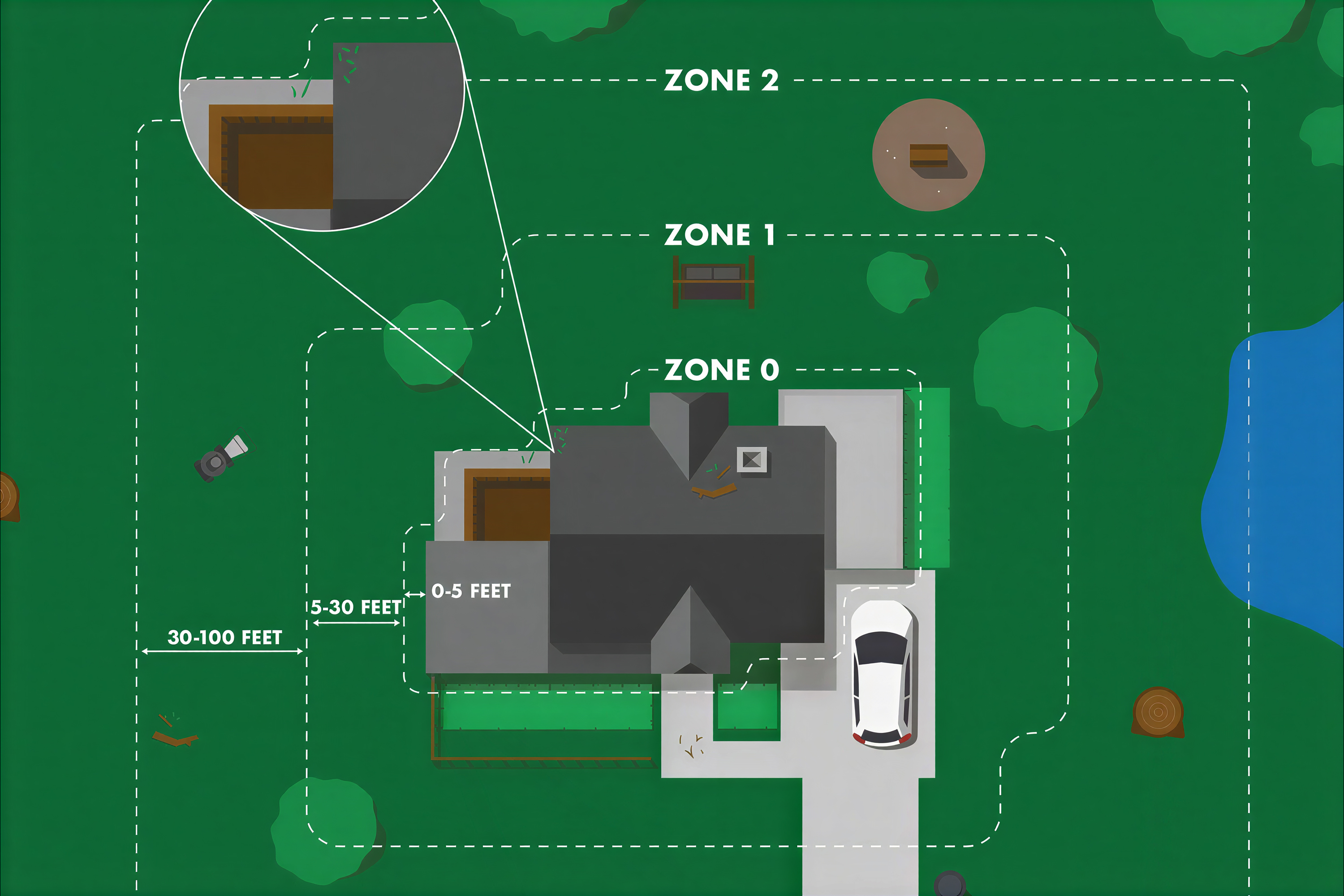
Photo courtesy of bof.fire.ca.gov/
Zone 0: The First 5 Feet Matter Most
Although Zone 0 is not yet legally required statewide, CAL FIRE considers it one of the most important areas for preventing a wildfire from reaching your structure.
Best practices include:
- Replace combustible mulch with gravel, pavers, or concrete where practical.
- Remove dead weeds, leaves, pine needles, and debris from roofs, gutters, and around buildings.
- Keep tree branches at least 10 feet away from chimneys.
- Minimize combustible items such as wood furniture, planters, and stored materials near structures.
- Move firewood, lumber, garbage containers, RVs, and other combustible storage outside this zone whenever possible.
- Consider replacing combustible fencing or gates attached to buildings with fire-resistant materials.
Zone 1: Reduce Fuel Within 30 Feet
The next priority is maintaining a well-managed landscape extending up to 30 feet from buildings (or to the property line if closer).
Key maintenance practices include:
- Remove dead plants, weeds, leaves, and pine needles.
- Prune shrubs near windows and buildings.
- Trim tree branches to maintain at least 10 feet of clearance from chimneys.
- Maintain spacing between trees and shrubs to slow fire spread.
- Keep decks, balconies, stairways, and the areas beneath them free of combustible vegetation.
- Relocate wood piles outside Zone 1 whenever possible.
- Maintain defensible space around outbuildings and LPG tanks.
Zone 2: Manage Vegetation Out to 100 Feet
Beyond Zone 1, Zone 2 focuses on reducing wildfire intensity rather than eliminating vegetation.
Recommended practices include:
- Maintain annual grasses at 4 inches or less.
- Space trees and shrubs both horizontally and vertically.
- Remove fallen branches and excessive leaf litter while maintaining healthy soil.
- Keep wood piles separated from surrounding vegetation.
- Continue maintaining defensible space around outbuildings and fuel tanks.
Local ordinances may require additional clearance beyond state requirements, so property owners should always verify regulations with their local fire agency.
Ongoing Maintenance Makes the Difference
Even if your property looked great a few months ago, conditions can change quickly. Stay alert for:
- Fast-growing weeds and grasses
- Dead branches, leaves, and plant debris
- Dense shrubs that reduce plant spacing
- Tree limbs growing closer to structures
- Irrigation issues creating dry, stressed vegetation
Stay Ahead of Wildfire Risk
At Stay Green, wildfire preparedness is built into our year-round maintenance approach. Our crews continuously monitor client properties for vegetation regrowth, fuel buildup, irrigation issues, and other conditions that can increase wildfire risk.
Regular inspections, proactive maintenance, and timely recommendations help clients maintain landscapes that are not only beautiful but better prepared whenever wildfire conditions emerge.
Wildfire preparedness isn't seasonal—it's an ongoing commitment that helps protect your property throughout the year.